
Why We’re All Coming to the Cottage: ‘Heated Rivalry’ is So Damn Important
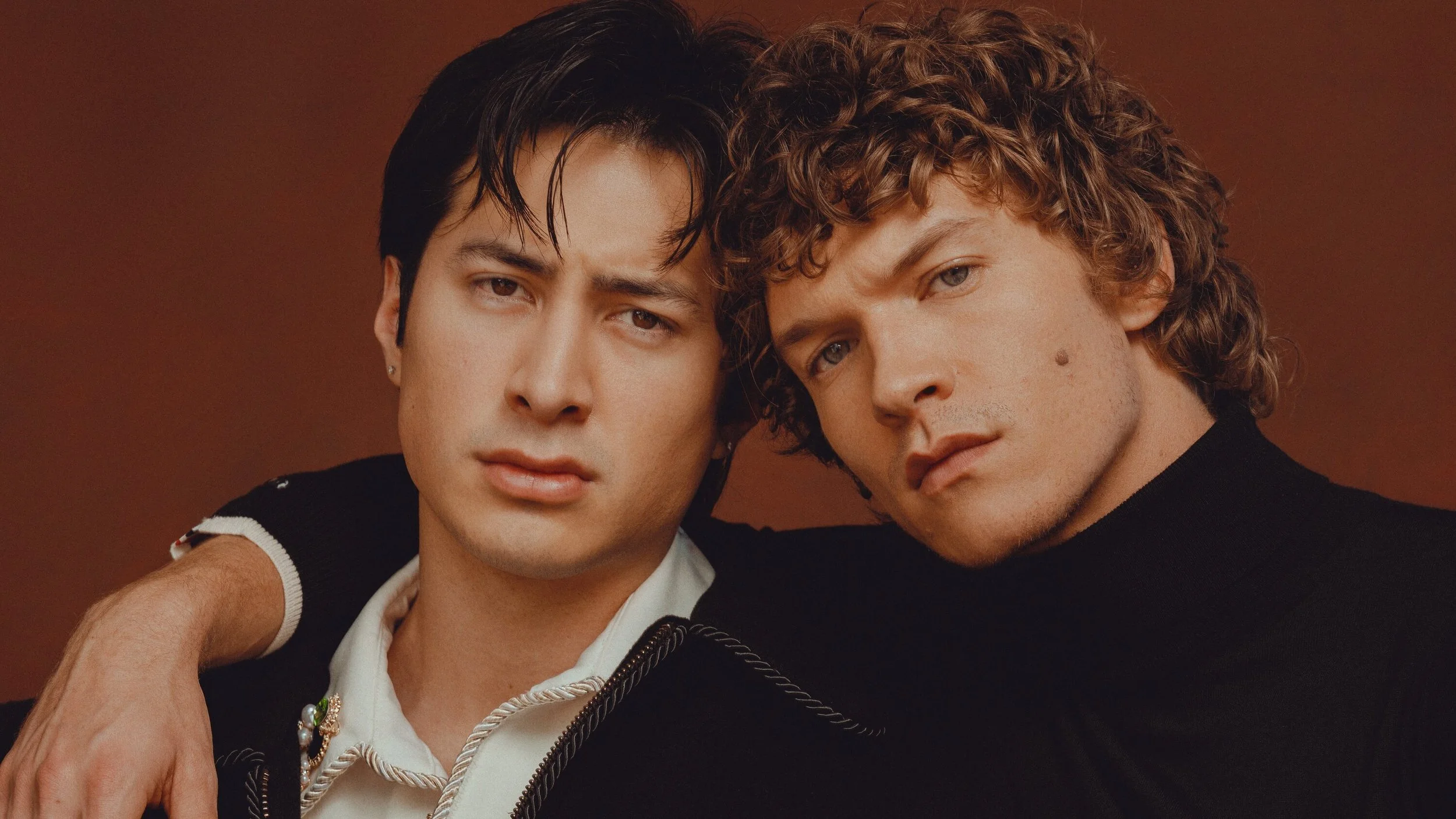
Actors Hudson Williams and Connor Storrie, stars of HBO’s Heated Rivalry for NYT
If you haven’t watched it yet, the gay hockey show, Heated Rivalry, the Canadian sensation that converted countless gay men into hockey fans overnight, has become a cultural phenomenon that has everyone promising that they are “coming to the cottage.” While the appeal of Heated Rivalry is pretty easy to spot, I can’t help but think about the show within the context of its impact on our culture and collective psychology, especially during a time where, once again, the rights of queer people are up for debate.
Spoiler Alert (You’ve Been Warned)
For those who have not seen it (first question: why?!) Heated Rivalry has two main storylines that intersect throughout season one. The first follows hockey prodigies Ilya Rozanov and Shane Hollander from their entrance into professional hockey over the first decade of their careers. Ilya, a bi-sexual Russian playing for Boston and Shane, a newly minted gay, bi-racial, player for Montreal are rivals who end up having causal hook ups, which progressively intensify in emotional depth and complexity as they try to navigate the experience of being stars in a hyper-masculine sport.
The second, less primary storyline involves veteran professional hockey player, Scott Hunter and barista, Kip Grady who meet over smoothies (with extra banana) and fall in love, while trying to navigate the same hyper-masculine world that Ilya and Shane are struggling with. There are some pretty phenomenal side characters, the majority of which are fierce, supportive, and protective women, all of whom add depth and nuance to the storylines.
What is Affirmation?
So why is a psychologist writing a post about a TV show with a lot of gay sex and very little hockey on his professional blog? While Heated Rivalry is entertaining and certainly has (a lot) of (graphic) gay sex, the show is much more culturally significant than how it may initially seem. To understand a piece of its impact, we need to first discuss the concept of affirmation. My doctoral research centered on affirmation, which is the validation that something exists, is true, and is valid. Culturally, heterosexual identities are affirmed every day, everywhere we look. From the media we consume to the products we buy, being straight is affirmed as true and valid. Our society is set up to affirm the heterosexual identity. Even just the fact that straight people can walk holding hands without fear that they will be verbally or physically assaulted is a form of affirmation.
Queer individuals, however, do not have the same privilege of affirmation. While, yes this has improved in some areas of society, it is still clear that queerness is seen as different and not the standard. This is most clearly exemplified in the need to “come out.” Coming out is the declaration that I am not of the norm, the assumed stock identity, with the hope that those we are coming out to will affirm this part of our identities. Being queer is viewed as a deviation from the norm, rather than a concurrent norm, existing alongside heterosexuality.
Humans are naturally connective. We need secure attachments to feel safe in the world. The message that you are an outsider, different, and “not normal”, along with both implicit and explicit threats of rejection, abandonment, and physical harm, are traumatic and a threat to the individuals’ sense of safety and security. Exposure to violent commentary from religious leaders, politicians, talking heads, “celebrities” (I’m looking at you, Nicki), those in the highest seats of our government, and even people in our everyday lives and families, keeps a queer persons’ nervous system in a heightened state of activation and reduces its sensitivity to perceived threats. This is a foundational component to significant negative outcomes such as; anxiety disorders, mood disorders, substance abuse, homelessness, experiences of trauma, and sexually transmitted diseases.
Episode 5 (And 6) Changed My DNA
Historically, media that included queer characters was not targeted to queer people. Characters were often written as one dimensional, flat, and shallow representations of stereotypical queerness that heterosexual people are able to digest and not have to think much beyond. Gay men have often found themselves squarely in the role of the bitchy, flamboyant sidekick to a more primary, female character. The “gay husband” trope equated gay characters to a handbag: an accessory that compliments the women around them and at best isn’t understood and worse not even acknowledged, by straight male characters. And bi-male characters in television have either just not been represented at all or when acknowledged, had their bi identity dismissed and invalidated as a lie. I once heard bisexuality described as “gay’s waiting room.” I could write a whole dissertation on bi-erasure but that’s for another blog post.
And this is why Heated Rivalry matters so much. The queer characters are deep, dimensional, complicated, imperfect, developing, and flawed. We follow them through a decade of their lives, during which time they grow. They adapt to their world, they gain new information which in turn, changes them and their relationships. They experience legitimate fears, while struggling to understand their emotions and the repercussions of them.
While a major plotline in Heated Rivalry is the internalized fear of experiencing rejection and abandonment, the thing that makes this show so different from other queer-focused shows is that those fears (thus far at least) are not realized.
Instead, in Ep 5, when Scott calls Kip down to the ice, simultaneously outing himself and hard launching their relationship in front of the world, they are received with excitement, support, and love. Scott is celebrated at an awards show, where he again talks about loving Kip openly. Kip’s father passionately supports his son in all of his life decisions, openly telling him how much he loves him. Relationships are vulnerable, honest, and connective. The characters are affirmed for who they are, that they matter, that they belong.
The impacts of that affirmation are immediately seen when Ilya calls Shane and tells him he is “coming to the cottage.” Seeing other people like him, in the same world, letting go of the same secret, and experiencing acceptance sent him the message that this aspect of his identity is good, right, and valid. This affirmation continues further in the final episode of the season when Shane’s father walks in and finds Ilya and Shane kissing, abruptly turns around and sprints home. The remaining scene of the season is spent with Shane coming out to his parents with Ilya supportively shoveling down pasta next to him. Again, Shane is not rejected but rather he is loved, pulled in, told he matters.
And the most powerful moment of the whole series (in my opinion) is when Shane’s mother apologizes to him for making it feel like he couldn’t tell her and asks for her forgiveness (Ladies and gentlemen, take notes- this is how you respond to your queer child when they come out to you). The only dry eye in my house when that scene played was Gordon’s and that's because he doesn’t speak English.
The queer characters aren’t being rejected. They aren’t the punchline of the joke and their sex and love isn’t viewed through a perverse and deviant lens. There are healthy, supportive, affirming relationships, not struggling with substance abuse, an HIV/AIDs scare, or abuse, which leaves the traditional queer character stuck in the stereotypical victim role. These are powerful, successful, brave, and multifaceted men being loved by a group of seriously badass women.
So yes, Heated Rivalry has graphic, prolonged sex scenes and secret love affairs between two men, while showing as little actual hockey being played as possible. The first couple episodes are kind of jarring to watch, and that's coming from a gay man. I can’t think of another show that depicted gay sex so vividly without the dynamic having a tone of danger, assault, or shame to it. In this show, we aren’t victims, we are empowered.
And that is what makes this show different. The core of the show, its heart, is bearing witness as two souls navigate the confusing, messy, oftentimes unclear, waters of finding love. Of making space for that love in the world. Not being what Vice President JD Vance referred to as “normal gay guys”, which are ones that hide their queerness for the comfort of straight people. Heated Rivalry throws queerness, sex, and love between two men right in your face and doesn’t let you look away. If you’re watching Heated Rivalry, you’re watching queer joy and that will keep me coming back to the cabin again and again.
