
Treating Trauma
In our work I will let you define what you have experienced in whatever way feels most authentic to you. I will never tell you that something isn’t “traumatic” if you define your experience in that way. We will work together to understand how those experiences have shaped your current ways of thinking and behaving, in contrast to how you would like to think and behave.
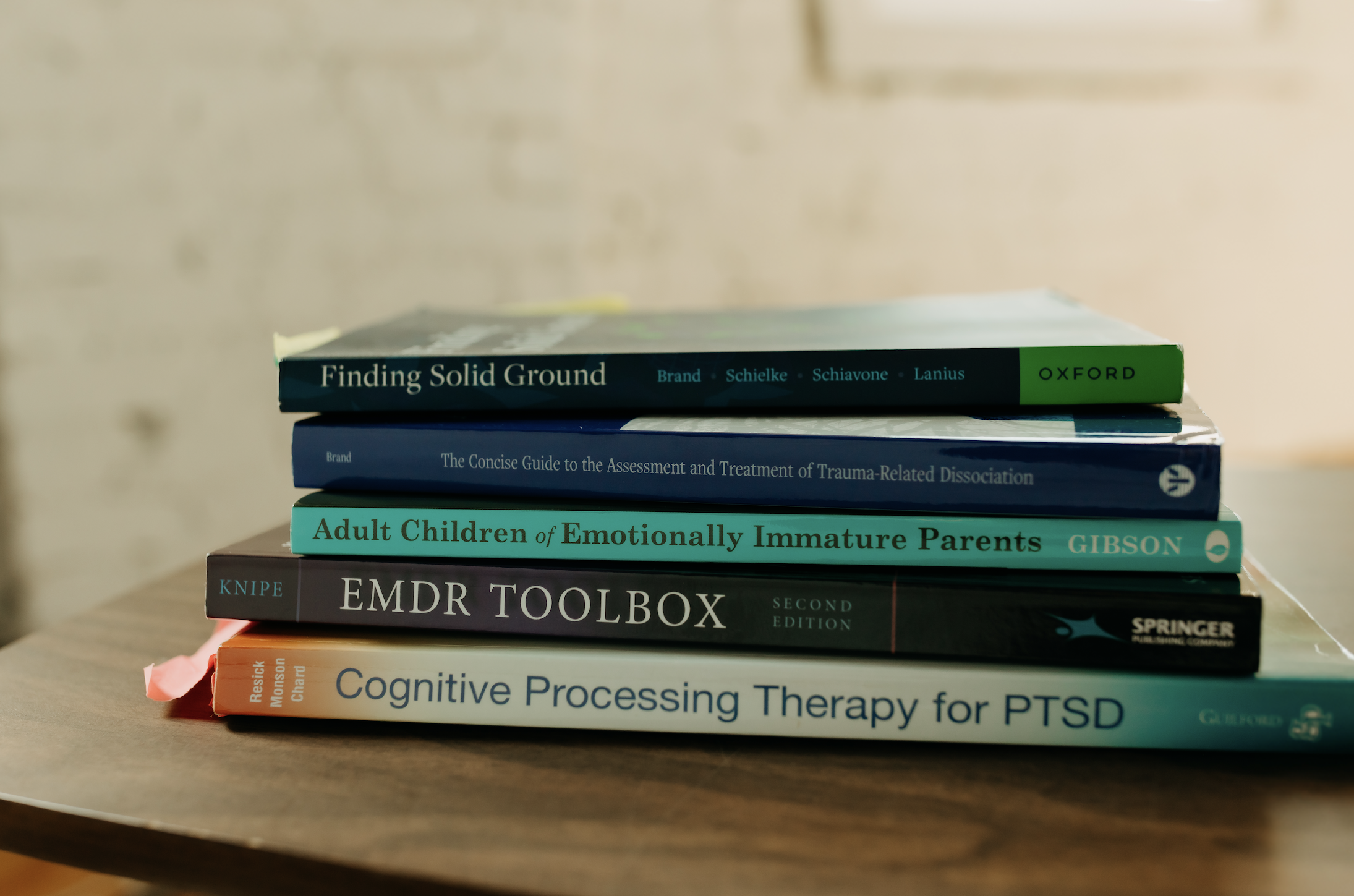
I will work with you to develop a safe, therapeutic space in which you can come as your authentic self and feel as though your experiences are heard, seen, and validated. I treat trauma from a Phase-Oriented, evidence-based approach, which prioritizes healthy coping, emotional processing, and integration with the life you are already living in order to achieve the life you hope to live.
I emphasize the belief that your responses to trauma have been your brain’s best attempts at keeping you safe from situations that you had no blueprint for navigating. Those attempts may have helped you survive in unfathomable circumstances, but unfortunately those old means of coping may not fit into your current life and quite often result in more harm than good at this time. By partnering with your brain in this way, we are able to help you access compassion for yourself, while learning new ways to respond to triggers.
An evidence-based approach

Phase Oriented Approach
Originally defined in a Three-Phase approach by Dr. Judith Herman, the Phase Oriented Approach to Trauma Treatment is a sequential and fluid process aimed at addressing the impacts of trauma in different areas of functioning in your life. Phase approaches to trauma emphasize first establishing your safety and then transition to working directly with any traumatic memories/experiences. Dr. Herman’s model is outlined below.
Phase One
Safety & Stabilization
This Phase focuses on the installation of solid, healthy coping skills, while simultaneously decreasing unhealthy means of coping. This could look like finding new ways to manage emotional distress other than self-harming or substance use. It could also entail setting healthy boundaries in relationships and/or ending relationships that are too toxic and stand in your way of healing.
Phase Two
Reprocessing
This Phase focuses on facing your trauma history and gaining a full understanding of the impact they have had on your life. This is done through varying interventions including narrative therapies, structured cognitive/behavioral approaches, and experiential therapies. This is always done in a safe, contained, and structured way that is set to your pace.
Phase Three
Integration
This Phase emphasizes the meanings you have made about yourself, others, and the world based on the traumatic experiences you have had. It works to rewrite those meanings and build an understanding of how you can integrate your experiences into the narrative of your life and your understanding of yourself.